
| Currently viewing: Our people and their remuneration / Next: Social and ethics report |
 |
 |
 |
Downloads |  |
Home |
Our people and their remuneration
MTN’s people
The calibre of MTN’s people will continue to be a key differentiator in the increasingly competitive communications sector. In 2012, we had nearly 27 000 permanent employees across 22 operations and at our head office in Johannesburg and our corporate office in Dubai.
We recognise that to achieve our strategic objectives and deliver on our vision to lead the delivery of a bold, New Digital world to our customers, the Group needs appropriately skilled, culturally diverse employees who are motivated by and enjoy their work. MTN people are encouraged to develop their careers and are offered opportunities to hone their skills to meet the needs of the evolving business. This will help the Group create a distinct customer experience, drive sustainable growth, transform our operating model and create and manage stakeholder value through innovation and best practice.
MTN strives to be an employer of choice and retain key skills. As the number of mobile licences increases, demand for talent grows, making retention efforts that much more important. As the business evolves towards a broader service offering, MTN’s philosophy is to employ experienced individuals who share and relate to MTN’s values. These are a “can-do” attitude, innovation, leadership, relationships and integrity.
MTN Employee Value Proposition (EVP)
The MTN deal is a compelling and unique people-centred
value proposition offered to all MTN employees across
our operating companies. It has five key components:
i) investing in talent; ii) a globally diverse culture; iii) total
rewards and recognition; iv) brand strength; and v) a
leadership brand. During 2012, various new and creative
methods were applied to further develop and enhance
the MTN deal internally to all staff and leaders to support
the MTN human resources (HR) community. The new and
improved www.mtn.com/careers website as well as 3D
digital icons assist the business to embed the EVP process
across the Group.
Investing in people and talent development
Investing in people and talent development remains an important priority for the Group and its operations to ensure that a sustainable pool of talent and skills is available to meet the organisation’s strategic objectives and to ensure MTN wins the battle for talent in its markets. The Group invested R383 million in people, talent and skills development. Internal efficiencies were obtained through the MTN Academy and its global deployment of the e-live online learning capability, which substituted classroom learning with 24-hour remote access to over 3 000 online learning applications. The result has been a dramatic decrease in logistical costs, although classroom learning is still an important platform for leadership talent development programmes offered through the MTN regional learning centres in Dubai, Accra and Johannesburg.
MTN employees spent 83 165 hours completing e-learning courses in 2012. This figure represents all staff who had received a score of 80% and above for completion of an e-learning course. Total hours invested in learning at MTN were 38,8 hours per full-time equivalent (FTE) employee and approximately US$1 500 per person in 2012. Overall, MTN invested 2,8% of payroll in talent and people development. The MTN Academy’s efficiency efforts included rigorous procurement practices and premium vendor partnerships, improved contract negotiations and smarter learning delivery capabilities. This resulted in more effective utilisation of learning infrastructure and the deployment of learning and development resources, without compromising quality and impact. The 2012 overall employee satisfaction scores for MTN people and talent development services remained well in line with the global benchmarks.
MTN has also partnered with the internationally recognised Investors in People standard (IIP). The IIP provides an integrated global framework for people and talent development in helping the organisation become a leading employer of choice, while at the same time supporting the strategic business agenda.
Culture, performance and recognition
Developing our globally diverse culture is one of the key EVP pillars. During 2012, the Group adopted a renewed focus in defining the MTN cultural operating system required to support and enable the Group’s new vision. A set of vital behaviours was identified and measured through various internal culture engagement sessions and staff satisfaction surveys. The vital behaviours are leader-led and have been embraced as strategically important to MTN’s future and success. The vital behaviours are: candour, active collaboration, complete accountability and get it done and set the tone for what is expected of every employee and leader in their interactions with each other and all stakeholders across the Group.
To support the new MTN vision statement and the focus on innovation and best practice, various new people and talent development learning solutions were launched across our operations to build skills for innovation during 2012.
The connection of people to business strategy is the foundation of the MTN Group’s Integrated Performance Management (IPM) framework. In the past three years, the compliance with online performance has improved significantly. We encourage regular performance review discussions throughout the year, with formal reviews conducted in January and July of each year. This ensures MTN maintains a culture of active performance engagement, development and corrective action throughout the year.
MTN’s EVP pillar of total rewards and recognition is supported by its global salary and incentive reward systems. The MTN Y’ello Stars recognition system provides opportunities for employees to nominate peers and team members for behaviour that goes beyond the call of duty. During 2012, we received 5 986 Y’ello Star nominations. Compared to 2011, the overall MTN Group-wide participation was more favourable, with more operations becoming committed and involved in the programme. Monthly recognition community forums share knowledge and best practice across operations. This contributed to the increase in participation of Y’ello Stars across the Group in 2012. The main recognition categories applicable since the launch of the programme in 2006 are: star performance, knowledge share, customer share and MTN values.
During 2012, the programme has evolved to align with the evolving business strategy and new categories were introduced, namely: innovation (driven through personal submissions by implementers of innovation ideas and not nominations), leadership, and a special category.
MTN ensures its alignment of work, people and performance is maintained through efficient and effective job and organisational design practices. The Hay Group job evaluation process remains the foundation to ensure work, performance and people are optimally aligned and integrated with the various organisational front and back office re-engineering and restructuring projects.
Leadership brand and talent management
During 2012, the MTN leadership talent management strategy further evolved to ensure MTN retains an overall succession bench strength ratio of between 2:1 and 3:1 for all priority leadership talent and critical positions within the Group. The development of a sustainable pipeline of leadership talent continued in 2012 with two groups of 30 high-potential leaders and successors to critical positions attending the MTN flagship executive development programme, GAP (Global Advancement Programme), in India and China. MTN’s flagship middle management programme, Flight, remained a critical enabler of leadership talent within the middle management pools. To date over 55 business improvement projects have been identified and addressed by participating delegates, with findings presented for performance improvement or innovations to their local executive teams.
We endeavour to conduct talent reviews annually by the local CEO teams to provide valuable insights to the operations’ and Group’s talent health and risk profile. The results of these annual talent reviews are being integrated into various decisions to acquire, develop, retain or rotate local talent within and between operations across the Group.
Enhancing health and safety
The wellbeing of our employees is of primary concern to MTN. MTN employees in 45% of our operations represent their colleagues on health and safety committees, which monitor and advise the Group on occupational health and safety at operations. In 59% of our operations, we monitor operational health and safety matters through business functions or nominated representatives.
We regret to report two work-related fatalities in the year in Ghana and Syria. We also had 36 work-related injuries.
We extend comprehensive benefits to mitigate against risks that employees may be exposed to during their career at MTN. As such, MTN has secured world-class assistance services for all our employees by partnering with International SOS (ISOS) and Control Risks Group (CRG). Through this partnership, all MTN employees have access to a 24-hour international alarm centre for any medical, security, travel and crisis-related emergencies. The alarm centre provides emergency expertise to MTN’s international travellers, expatriates and their dependants, as well as our global workforce in general.
Over the past few years we have seen increasing levels of national social upheaval in some of the countries in which we operate. In countries with particularly high incidents of unrest, customised safety solutions are implemented to complement the ISOS and CRG standard services. These may include increased security services at our premises, flexible working hours and remote working tools for employees who cannot safely travel between office and home, home relocation and counselling services where necessary, and even food vouchers and safe transport services.
More general health and safety risks may be faced by field workers, employees who are required to conduct extensive mobile telecommunications, and generally employees where climate conditions may be extreme. Employees and contractors at higher electromagnetic field (EMF) network risk are required to undertake annual compliance training and certification. Localised solutions to address other environmental issues such as air quality, flooding and other disasters affecting employees may include fully-paid “pollution” holidays, and earthquake and flooding assistance. Some operations also offer fully or partially-subsidised office lunches, and on-site crèche facilities to support the employment of women in the workplace in countries where opportunities for women to access employment are more restrictive.
Equitable labour practices
MTN’s recruitment policy reinforces the Group’s focus on eliminating all prejudice based on gender, ethnic origin, marital status, religion, age and physical disabilities in filling vacant positions. When recruiting for new positions, we give preference to those employees whose jobs have become redundant.
MTN has formal disciplinary processes in place to prevent arbitrary dismissals. These conform to International Labour Organisation standards. We are committed to upholding and enforcing codes of conduct that promote fundamental human rights as defined by the Universal Declaration of Human Rights. Freedom of association and union recruitment is not prohibited at any operation.
Remuneration governance
MTN’s remuneration and human resources (R&HR) committee is delegated responsibility by the board to make sound remuneration decisions that are aligned to the Company strategy and are consistent and within acceptable governance principles. Full details of the committee’s role, constitution and attendance details are outlined in the corporate governance report available on www.mtn.com. Remuneration details are on page 87 of this report.
Group remuneration strategy and policy
MTN’s remuneration strategy aims to focus the effort and attention of individuals and teams on achieving the goals of both the short-term business plan and the Group’s long-term sustainability, both of which are imperative to shareholder value creation.
Following the review of our remuneration policy during 2011, changes were proposed to ensure appropriate alignment with the interests of shareholders and reinforce the delivery of the business strategy within the Group’s risk management framework. The revised report encourages sustainable performance and is guided by the principle to include a strong link between pay and performance.
Our remuneration practices are based on the following principles:
- Attracting and retaining high-quality individuals with the optimum mixture of competencies, ability, experience and skill to deliver on strategy;
- Encouraging a culture of organisational, team and individual performance and significantly incentivising employees who deliver sustained performance consistent with strategic goals;
- Delivering a total reward proposition outlined in the Group’s value proposition (The MTN Deal) that is affordable yet competitive, fair and justifiably differentiated; and
- Encouraging behaviour consistent with MTN's values.
The R&HR committee constantly reviews the remuneration policy to ensure that the delivery of these arrangements remains competitive and in accordance with regulatory requirements.
Remuneration structure
MTN’s remuneration policy applies common principles and practices to all employees, including executive directors and other senior managers, although the exact structure and quantum of individual packages varies by business unit, roles and geographic location. Generally, employees based in South Africa are remunerated on a Total Guaranteed Package (TGP) approach, which includes a combination of base remuneration and benefit provisions, commonly referred to as fixed remuneration. The Group has implemented this approach subject to labour regulations and remuneration practices. Operations based outside South Africa have adopted and customised this in accordance with local practices and regulations.
The table below summarises the components of the Total Remuneration (TGP plus variable plus other remuneration) Package structure for the 2012 financial period.
| Fixed/variable | Component | Component description and strategic intent | |||||
| Fixed remuneration | Base salary |
|
|||||
| Benefits |
|
||||||
| Variable remuneration | Short-term incentives (STI) |
|
|||||
| Long-term incentives (LTI) |
|
||||||
| Other remuneration | Lifestyle |
|
Composition of remuneration package for executive directors
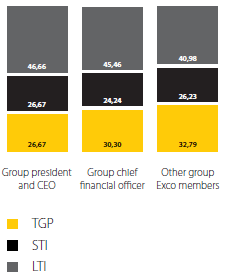
The following charts present the target remuneration mix (TGP, STI & LTI) for the Group president and CEO, the Group CFO and other exco members.
 Composition of remuneration Composition of remunerationpackage for executive directors % |
|
 |
|
| Note: STIs are based on “on-target” performance earning potential. |
Fixed remuneration
Base salary
Base pay is normally benchmarked to the market median and is reviewed annually. Variations may be influenced by factors such as the nature of the job, experience levels, changes in responsibilities, performance track records and the strategic importance of the role.
Benefits
Benefits are forms of value, other than salary payments, that are provided to employees in return for their contribution to the organisation. They typically include retirement contributions, health insurance, life insurance and disability insurance. Some benefits, such as unemployment and other forms of leave and worker's compensation may be statutory requirements and vary from country to country. Other non-financial benefits include leave, study assistance and additional benefits further discussed under "other remuneration".
Remuneration determination and benchmarking
Executive remuneration is structured to be competitive on a global scale. This is in the context of scarce key talent, rising costs and shareholder value creation. At MTN, executive salaries are benchmarked against global competitors and where applicable, salaries are adjusted in line with market rates. MTN's size and complexity, as well as each executive role, are regularly reviewed against benchmarks from a base, guaranteed package and variable pay perspective.
In 2011, the salaries of the Group president and CEO and other senior executives were revised following a benchmark exercise conducted after the Company's senior leadership changes.
Variable remuneration
Performance incentives
MTN Group's short-term incentive programmes are meant to drive particular behaviours and obtain desired results within the agreed risk framework. In the current incentive framework, jobs with a sales function participate in commission programmes, whereas non-sales roles participate in the Group's performance bonus programme. The latter intends to recognise the achievement of a combination of group, team and individual objectives.
Structure of performance incentives
The bonus structure for executives is linked to the operational and financial drivers of the business performance measured against the budget for individual operations and the Group as a whole. This bonus structure ensures that the business drivers and key results provide the necessary balance between top-line Group performance targets (EBITDA, cash flow and revenue) as well as operational efficiency and effectiveness targets measured on an annual basis.
Accordingly, the 2012 bonus programme for executives evaluated performance, firstly at a Company performance (CP) level and secondly at a team performance (TP) level. The applicable calculation parameters for 2012 are as follows:
| Group category |
Designation | Incumbent | Company performance |
Team performance |
Minimum bonus |
On target |
Hyper bonus |
|||||||
| Group president and CEO | Group president and CEO | RS Dabengwa | 70% | 30% | 0% | 100% | 200% | |||||||
| Group executive director | Group CFO | NI Patel | 70% | 30% | 0% | 80% | 160% | |||||||
| Group chief officers | Group chief human resources and corporate affairs officer | PD Norman | 40% | 60% | 0% | 70% | 140% | |||||||
| Group chief technology and information officer | JA Desai | 50% | 50% | |||||||||||
| Group chief commercial officer | CM de Faria | 50% | 50% | |||||||||||
| Group chief operations executive | A Farroukh | 70% – Top 7 Opcos | 30% | |||||||||||
| Group chief business risk officer | S Fakie | 40% | 60% | |||||||||||
| Group chief strategy, mergers and acquisition officer | KL Shuenyane | 40% | 60% | |||||||||||
| Operating company CEOs (On the Group Exco) | CEO: South Africa | KW Pienaar | 70% – MTN South Africa | 30% | ||||||||||
| CEO: MTN Nigeria | B Goschen | 70% – MTN Nigeria | 30% |
Company performance (CP)
MTN Group executives are measured on Group attributable earnings. In 2012, MTN exceeded the target resulting in the executives earning above-target performance bonuses. On an operational level, the degree of contribution was based upon the employee level and was directly related to the degree of influence the employee has on the entity's performance. Thus a CEO has a relatively higher weighting towards the Company performance whereas exco members appointed on subsidiary boards have proportionate weightings apportioned between Group and applicable subsidiaries. The degree of variation is reviewed annually by the Group president and CEO in consultation with the R&HR committee, and where applicable, amended accordingly.
Team performance (TP)
Team performance aims at measuring team efforts aligned to the Group's strategic priorities. The team performance targets consist of operational imperatives based on a balanced scorecard, which are typically contracted at the beginning of the year (the contracting period) and evaluated against year-end actual audited performance results.
For executive directors and other exco members, their performance assessment process measures both absolute and relative performance against approved targets, as well as non-financial performance. Incentive amounts payable at the end of a financial year are based on a combination of performance against target in respect of the level of Group attributable earnings and individual performance (KPIs) scorecards.
Executive committee members' KPI summary
For 2012, the following dimensions were approved at the beginning of the financial year.
| Perspective | Group president and CEO |
Group chief financial officer |
Group chief technology and information officer |
Group chief commercial officer |
Group chief business risk officer |
Group chief strategy, M&A officer |
Group chief HR & corporate affairs officer |
Group chief operations executive |
MTN Nigeria CEO |
MTN South Africa CEO |
||||||||||||
| RS Dabengwa | NI Patel | JA Desai | C de Faria | S Fakie | KL Shuenyane | PD Norman | A Farroukh | B Goschen | KW Pienaar | |||||||||||||
| Element 1: Company performance indicator: | ||||||||||||||||||||||
| Group attributable earnings (EBITDA, cash-flow and revenue) |  |
|
|
|
|
|
|
|
|
|
||||||||||||
| Element 2: Group strategy and functional execution | ||||||||||||||||||||||
 |
Group EBITDA margin | |
|
|
|
|
|
|
|
|||||||||||||
|
Expenditure management (capex) | |
|
|||||||||||||||||||
|
Expenditure management (opex) | |
|
|
|
|
|
|
|
|||||||||||||
|
Data revenue contribution | |
|
|
||||||||||||||||||
|
Monetisation of targeted assets (tower transactions) | |
|
|
||||||||||||||||||
|
Upstreaming of cash | |
|
|
||||||||||||||||||
|
M&A strategy management on targeted assets | |
|
|||||||||||||||||||
|
Global shared services strategy and execution (HR, finance, procurement and IT) | |
|
|
|
|||||||||||||||||
|
Device strategy management | |
|
|
||||||||||||||||||
|
Global ICT strategy management | |
|
|
|
|||||||||||||||||
|
Business risk and operational compliance | |
||||||||||||||||||||
|
Group equity transactions | |
|
|
||||||||||||||||||
|
Market share strategy management | |
|
|
||||||||||||||||||
|
Customer centricity management | |
||||||||||||||||||||
|
Global service delivery platforms | |
|
|
||||||||||||||||||
|
Mobile Money strategy management | |
|
|||||||||||||||||||
|
Brand health and equity index | |
||||||||||||||||||||
|
Customer satisfaction and retention index | |
|
|||||||||||||||||||
|
Employee health index (EHI) | |
|
|
|
|
|
|
|
|
|
|||||||||||
|
Labour productivity composite index | |
||||||||||||||||||||
|
Supply chain savings | |
|
|||||||||||||||||||
MTN Group Long-Term Incentive (LTI) schemes
Long-term incentive schemes are designed to retain key and senior employees by aligning their long-term performance with the interests of shareholders. The Group operates a combination of an equity-and cash-settled scheme for its workforce. Since 2001, the Group has implemented the following schemes:
MTN equity schemes
| Plan type | Eligible participants | Date implemented |
Performance conditions |
Last vesting period |
|||||
| Share Options Scheme (Options) | All employees regardless of level | 2001 | N/A | 2014 | |||||
| Share Appreciation Rights Scheme (SARS) | All employees at junior management level and above | 2006 | N/A | 2018 | |||||
| Share Rights Scheme (SRS) | All employees at junior management level and above | 2008 | N/A | 2020 | |||||
| Employee Share ownership Plan (ESOP) | All general staff at MTN Level 1 and 2 | 2010 | N/A | Vested, expiring 2015 | |||||
| Performance Share Plan (PSP) | All employees at junior management level and above | 2010 | Refer to note below | Vested, expiring 2015 |
Please refer to “Notes to the Group Financial Statements” for additional information.
MTN Group share administration
In 2012, MTN appointed Investec Share Plan Services (ISPS) to host the online Group share schemes administration platform. We anticipate that all share records under the NSO scheme will be fully migrated and verified by the end of the second quarter of 2013. The migration of Options, SARS, SRS and PSPs was completed in January 2013.
Trading in MTN shares was re-opened on 6 March 2013 immediately after the announcement of Group results. Accordingly, the trading process was conducted via the online system, where participants with matured options and rights use this platform to view and execute trading. The trading platform will be subjected to a full audit review by internal risk in May 2013, with the results thereof reported to the R&HR committee and the Group share scheme trustees.
MTN non-equity schemes for non-South African employees (NSO)
It is of prime importance to MTN to attract, motivate and retain capable people across all its operations. To create a sense of "one-ness" with the MTN Group brand, the Group offers eligible employees at junior management level and above, both expatriate and local, participation in the Group's Notional Share Option (NSO) scheme. This scheme enhances MTN's commitment to the "One Group, One MTN" philosophy.
Qualifying employees not only own options, but also participate in the growth of the Group and its operations, as applicable. The main objective of this long-term incentive scheme is to encourage an alignment between the individual interests of senior employees and the long-term success of the Group.
The general rules governing the Company's long-term schemes are as follows:
General rules of the MTN Group long-term incentive schemes
Employees are generally eligible to participate in the above schemes if they have met a minimum continuous service criterion within MTN, have not reached their retirement age at the date of allocation and subject to the approval of the R&HR committee. In addition, MTN reserves the right to exclude participation by certain employees by virtue of their employment status e.g. disciplinary, suspension, dismissal and so forth. Further details are available under the Notes to the Group Financial Statements. A summary of previous allocations and the vesting dates is presented below:
| LTI schemes vesting schedule | |||||||||||||||||
| Plan type | Issue period | Vesting timelines per anniversary (cumulative) | |||||||||||||||
| Share options | Date | Year 0 | > Year 1 | > Year 2 | > Year 3 | > Year 4 | > Year 5 | > Year 10 | |||||||||
28 S ep 01* ep 01* |
|
 |
 |
 |
 |
|
 |
||||||||||
| 02 Sep 02 | |
|
|
|
|
|
|
||||||||||
| 02 Jan 03 | |
|
|
|
|
|
|
||||||||||
| 07 Jul 03 | |
|
|
|
|
|
|
||||||||||
| 01 Dec 03 | |
|
|
|
|
|
|
||||||||||
| 01 Dec 04 | |
|
|
|
|
|
|
||||||||||
| SARS and SRS | 01 Nov 04 | |
|
|
|
|
|
|
|||||||||
| 01 Dec 04 | |
|
|
|
|
|
|
||||||||||
| 31 May 06 | |
|
|
|
|
|
|
||||||||||
| 31 May 06* | |
|
|
|
|
|
|
||||||||||
| 21 Nov 06 | |
|
|
|
|
|
|
||||||||||
| 01 Jan 07 | |
|
|
|
|
|
|
||||||||||
| 02 Apr 07 | |
|
|
|
|
|
|
||||||||||
| 22 Jun 07 | |
|
|
|
|
|
|
||||||||||
| 19 Mar 08 | |
|
|
|
|
|
|
||||||||||
| 01 Sep 08 | |
|
|
|
|
|
|
||||||||||
| 28 Jun 10* | |
|
|
|
|
|
|||||||||||
| PSPs | 29 Jun 11** | |
|
|
 |
|
|
||||||||||
| 29 Jun 11 | |
|
|
|
|
|
|||||||||||
| 29 Dec 11 | |
|
|
|
|
|
|||||||||||
| 28 Dec 12 | |
|
|
|
|
|
|||||||||||
| * | This offer includes an allocation with one year accelerated vesting. |
| ** | This offer was accelerated from 36 months to 30 months. |
| key: | Allocation date  20% tranche vested (cumulative) 20% tranche vested (cumulative)  30% tranche vested (cumulative) 30% tranche vested (cumulative) |
Performance conditions evaluation  Non-vested portion of award Expiry Non-vested portion of award Expiry |
Further details relating to the current status of allocations can be found under the Notes to the Group Financial Statements. In the first quarter of 2012, the administration of the schemes was transferred to the Group compensation and benefits function as the share schemes are an element of total reward's EVP and so should not be managed within the same custodianship. Notwithstanding this, to ensure an effective transition between the former administrator (Company secretariat) and Group compensation and benefits, some of the historical queries are to be resolved jointly by these two functions.
Audit comment: During 2011/2012, an audit review of the equity schemes was conducted by internal business risk as well as external consultants (PricewaterhouseCoopers). The results of the audit lead to key risk control measures being instituted to mitigate any potential risk. Share trustees were then informed of the audit findings and supported the imposition of control measures from both a system perspective and administration accuracy levels.
Other remuneration
MTN offers other benefits typically not disclosed in payslips. These include lifestyle benefits, leave of absence and additional insurance products such as funeral cover which are offered on a subscription basis. Although some of these benefits are not prevalent in some of the MTN operations, there are country-specific programmes approved and aligned equivalent to South African benefits.
Remuneration of prescribed officers
The board, as part of evolving best practice and in compliance with corporate governance, has provided disclosure on prescribed officers under the prescribed officers' emoluments and related payments.
Expatriate compensation
The expatriate compensation management model was refreshed to better address the changing needs of the Group and to introduce tighter compensation scales. The introduction of the United Arab Emirates as a hypothetical home base for purposes of assignment and compensation management, coupled with a "balance sheet" or "build-up" approach incorporating a base pay indexing element, has given MTN a framework for consistent, relevant and accurate pay determination.
MTN continued its drive to rely less on expatriates within operating companies. Following a study related to a phased initiative in this regard, immediate plans for Afghanistan, Benin, Ghana, Guinea Conakry and Liberia led to an average reduction in expatriate headcount for these countries of more than a third.
Non-executive director (NED) remuneration
The R&HR committee is responsible for advising on the remuneration of non-executive directors, including reviewing remuneration recommendations as put forward by the executive committee in consultation with external remuneration consultants. The committee also recommends the remuneration for approval by the board and shareholders. The remuneration for NEDs is considered annually and is determined in light of market practice and with reference to the time, commitment and responsibilities associated with the roles.
MTN Group's non-executive directors receive an annual retainer and meeting attendance remuneration. They do not participate in any type of incentive scheme nor do they receive any medical and pension-related benefits. The remuneration paid to non-executive directors on page 87 of this report and the proposed remuneration for 2013 is disclosed in the notice to the annual general meeting.
Contracts and severance: MTN's policies regarding Group executive employment contracts dictate the period of the contract as well as the notice of termination. Presently, MTN does not enter into limited duration contracts for Group executives, with the exception of the Group president and CEO. The inclusion of a period of restraint in the employment contract is generic and no specific timeframes are indicated. Notice of termination for Group executives is three months, unless otherwise specified.
Directors’ and prescribed officers’ emoluments and related payments. The tables set out on pages 87 to 95 have been audited.
Directors’ emoluments and related payments
For the year ended 31 December 2012
| Date appointed |
Salaries R000 |
Post- employment benefits R000 |
Other benefits* R000 |
Bonuses R000 |
Subtotal | Share gains** R000 |
Total R000 |
||||||||||
| Executive directors | |||||||||||||||||
| RS Dabengwa | 1/10/01 | 8 405 | 1 078 | 600 | 13 456 | 23 539 | – | 23 539 | |||||||||
| NI Patel | 27/11/09 | 5 030 | 645 | 1 742 | 6 431 | 13 848 | – | 13 848 | |||||||||
| Total | 13 435 | 1 723 | 2 342 | 19 887 | 37 387 | – | 37 387 |
| * | Includes medical aid and unemployment insurance fund. |
| ** | Pre-tax gains and post brokerage cost on share appreciation rights scheme and share rights plan. |
| Date appointed |
Retainer# R000 |
Attendance# R000 |
Special board R000 |
Special projects R000 |
Ad hoc work R000 |
Total R000 |
|||||||||
| Non-executive directors | |||||||||||||||
| MC Ramaphosa | 1/10/01 | 270 | 550 | 400 | – | – | 1 923 | ||||||||
| KP Kalyan | 13/6/06 | 270 | 418 | 209 | – | – | 897 | ||||||||
| AT Mikati*† | 18/7/06 | 839 | 585 | 402 | – | – | 1 826 | ||||||||
| MJN Njeke | 13/6/06 | 279 | 316 | 192 | – | – | 787 | ||||||||
| JHN Strydom | 11/3/04 | 319 | 508 | 210 | 109 | 10 | 1 156 | ||||||||
| AF van Biljon | 1/11/02 | 280 | 402 | 210 | 145 | – | 1 037 | ||||||||
| J van Rooyen | 18/7/06 | 333 | 498 | 250 | 91 | 58 | 1 230 | ||||||||
| MLD Marole | 1/1/10 | 252 | 411 | 210 | 55 | – | 928 | ||||||||
| NP Mageza | 1/1/10 | 304 | 492 | 210 | 109 | 58 | 1 173 | ||||||||
| A Harper* | 1/1/10 | 854 | 593 | 403 | 35 | – | 1 885 | ||||||||
| F Titi | 1/7/12 | 96 | 174 | 87 | 18 | – | 375 | ||||||||
| Sub-total non-executive directors | 4 799 | 4 947 | 2 783 | 562 | 126 | 13 217 |
| * | The fees have been paid in euro but have been converted to rand for the sake of consistency. |
| † | Fees are paid to M1 Limited. |
| # | Retainer and attendance fees include fees for board and committees. |
Directors’ emoluments and related payments
For the year ended 31 December 2011
| Date appointed |
Salaries R000 |
Post- employment benefits R000 |
Other benefits** R000 |
Bonuses R000 |
Subtotal | Share gains*** R000 |
Total R000 |
||||||||||
| Executive directors | |||||||||||||||||
| RS Dabengwa | 01/10/01 | 7 133 | 903 | 485 | 14 007 | 22 528 | – | 22 528 | |||||||||
| NI Patel | 27/11/09 | 4 719 | 600 | 1 945 | 7 478 | 14 742 | 2 435 | 17 177 | |||||||||
| PF Nhleko* | Resigned | 2 421 | 306 | 35 095 | 10 000 | 47 822 | 997 | 48 819 | |||||||||
| Total | 14 273 | 1 809 | 37 525 | 31 485 | 85 092 | 3 432 | 88 524 |
| * | Resigned on 31 March 2011. Other benefits include the shareholder approved restraint of trade. |
| ** | Includes medical aid and unemployment insurance fund. |
| *** | Pre-tax gains and post brokerage cost on share appreciation rights scheme and share rights plan. |
| Date appointed |
Retainer# R000 |
Attendance# R000 |
Special board R000 |
Special projects R000 |
Ad hoc work R000 |
Total R000 |
|||||||||
| Non-executive directors | |||||||||||||||
| MC Ramaphosa | 1/10/01 | 901 | 371 | 533 | – | – | 1 805 | ||||||||
| DDB Band* | 1/10/01 | 57 | 61 | 61 | – | 283 | 462 | ||||||||
| KP Kalyan | 13/6/06 | 249 | 284 | 315 | 54 | 70 | 972 | ||||||||
| AT Mikati **† | 17/7/06 | 799 | 438 | 585 | – | – | 1 822 | ||||||||
| MJN Njeke | 13/6/06 | 260 | 286 | 137 | 17 | 52 | 752 | ||||||||
| JHN Strydom | 11/3/04 | 260 | 286 | 297 | 125 | 70 | 1 038 | ||||||||
| AF van Biljon | 1/11/02 | 260 | 267 | 280 | 143 | 52 | 1 002 | ||||||||
| J van Rooyen | 17/7/06 | 287 | 306 | 262 | 89 | – | 944 | ||||||||
| MLD Marole | 1/1/10 | 211 | 212 | 256 | 36 | 70 | 785 | ||||||||
| NP Mageza | 1/1/10 | 222 | 231 | 280 | 143 | 52 | 928 | ||||||||
| A Harper** | 1/1/10 | 799 | 438 | 371 | – | – | 1 608 | ||||||||
| Total | 4 305 | 3 180 | 3 377 | 607 | 649 | 12 118 |
| * | Resigned 11 March 2011. |
| ** | Fees that have been paid in euro have been converted to rand. |
| † | Fees are paid to M1 Limited. |
| # | Retainer and attendance fees include fees for board and committees. |
Prescribed officers’ emoluments and related payments
For the year ended 31 December 2012
| Salaries R000 |
Post- employment benefits R000 |
Other benefits R000 |
Bonuses R000 |
Sub-total R000 |
Share gains R000 |
Total R000 |
|||||||||
| Prescribed officers | |||||||||||||||
| JA Desai | 5 634 | 853 | 1 149 | 6 256 | 13 892 | – | 13 892 | ||||||||
| I Sehoole† | 930 | 119 | 68 | – | 1 117 | – | 1 117 | ||||||||
| PD Norman | 3 809 | 488 | 426 | 4 201 | 8 924 | 1 804 | 10 728 | ||||||||
| C de Faria | 5 633 | 563 | 16 | 5 712 | 11 924 | – | 11 924 | ||||||||
| J Ramadan# | 1 156 | – | 31 744 | – | 32 900 | – | 32 900 | ||||||||
| A Farroukh | 6 104 | – | 142 | 6 788 | 13 034 | – | 13 034 | ||||||||
| KL Shuenyane | 3 722 | 477 | 261 | 3 555 | 8 015 | – | 8 015 | ||||||||
| S Fakie | 2 834 | 377 | 338 | 3 200 | 6 749 | – | 6 749 | ||||||||
| K Pienaar | 4 104 | 526 | 284 | 4 377 | 9 291 | 5 147 | 14 438 | ||||||||
| B Goschen | 5 045 | 546 | 124 | 3 095 | 8 810 | – | 8 810 | ||||||||
| Total | 38 971 | 3 949 | 34 552 | 37 184 | 114 656 | 6 951 | 121 607 |
| † | Withdrawn 31 March 2012. |
| # | Retired 31 March 2012 . |
Prescribed officers’ emoluments and related payments
For the year ended 31 December 2011
| Salaries R000 |
Post- employment benefits R000 |
Other benefits R000 |
Bonuses R000 |
Sub-total R000 |
Share gains* R000 |
Total R000 |
|||||||||
| Prescribed officers | |||||||||||||||
| JA Desai | 4 746 | 635 | 136 | 6 110 | 11 627 | 2 188 | 13 815 | ||||||||
| I Sehoole | 3 720 | 477 | 60 | 4 067 | 8 324 | – | 8 324 | ||||||||
| PD Norman | 3 647 | 464 | 66 | 4 740 | 8 917 | 11 435 | 20 352 | ||||||||
| C de Faria | 4 753 | 475 | – | 5 781 | 11 009 | 7 266 | 18 275 | ||||||||
| J Ramadan | 4 136 | 514 | 155 | 5 453 | 10 258 | 7 266 | 17 524 | ||||||||
| A Farroukh | 4 666 | 466 | 1 363 | 3 732 | 10 227 | 5 517 | 15 744 | ||||||||
| KL Shuenyane | 3 505 | 449 | 48 396 | 4 245 | 56 595 | – | 56 595 | ||||||||
| S Fakie | 2 638 | 350 | 305 | 3 209 | 6 502 | 1 446 | 7 948 | ||||||||
| Total | 31 811 | 3 830 | 50 481 | 37 337 | 123 459 | 35 118 | 158 577 |
| * | Pre-tax gains and post brokerage cost on share appreciation rights scheme and share rights plan. |
Equity compensation benefits for executive directors and directors of major subsidiaries in respect of the share option scheme
fincolumnthinlineEquity compensation benefits for executive directors and directors of major subsidiaries in respect of the share appreciation rights and share rights schemes
| Offer date | Strike price R |
Vesting date |
Number out- standing at 31 December 2011 |
Exercised 2012 |
Exercise date |
Exercise price R |
Number out- standing at 31 December 2011 |
||||||||
| Z Bulbulia | |||||||||||||||
| 31/5/2006 | R56,83 | 30/11/2007 | 12 920 | (12 920) | 23/8/2012 | R156,80 | – | ||||||||
| 31/5/2006 | R56,83 | 30/11/2008 | 12 920 | (12 920) | 23/8/2012 | R156,80 | – | ||||||||
| 31/5/2006 | R56,83 | 30/11/2009 | 19 380 | (19 380) | 23/8/2012 | R156,80 | – | ||||||||
| 31/5/2006 | R56,83 | 30/11/2010 | 19 380 | (19 380) | 23/8/2012 | R156,80 | – | ||||||||
| 19/3/2008 | R126,99 | 19/3/2010 | 4 920 | – | – | – | 4 920 | ||||||||
| 19/3/2008 | R126,99 | 19/3/2011 | 4 920 | – | – | – | 4 920 | ||||||||
| 19/3/2008 | R126,99 | 19/3/2012 | 7 380 | – | – | – | 7 380 | ||||||||
| 19/3/2008 | R126,99 | 19/3/2013 | 7 380 | – | – | – | 7 380 | ||||||||
| Total | 89 200 | (64 600) | 24 600 | ||||||||||||
| RS Dabengwa | |||||||||||||||
| 31/5/2006 | R56,83 | 30/11/2008 | 13 920 | – | – | – | 13 920 | ||||||||
| 31/5/2006 | R56,83 | 30/11/2009 | 26 440 | – | – | – | 26 440 | ||||||||
| 31/5/2006 | R56,83 | 30/11/2010 | 40 440 | – | – | – | 40 440 | ||||||||
| 21/11/2006 | R71,00 | 21/11/2008 | 8 680 | – | – | – | 8 680 | ||||||||
| 21/11/2006 | R71,00 | 21/11/2009 | 8 680 | – | – | – | 8 680 | ||||||||
| 21/11/2006 | R71,00 | 21/11/2010 | 13 020 | – | – | – | 13 020 | ||||||||
| 21/11/2006 | R71,00 | 21/11/2011 | 13 020 | – | – | – | 13 020 | ||||||||
| 19/3/2008 | R126,99 | 19/3/2010 | 14 440 | – | – | – | 14 440 | ||||||||
| 19/3/2008 | R126,99 | 19/3/2011 | 14 440 | – | – | – | 14 440 | ||||||||
| 19/3/2008 | R126,99 | 19/3/2012 | 21 660 | – | – | – | 21 660 | ||||||||
| 19/3/2008 | R126,99 | 19/3/2013 | 21 660 | – | – | – | 21 660 | ||||||||
| Total | 196 400 | – | – | – | 196 400 | ||||||||||
| PD Norman | |||||||||||||||
| 21/11/2006 | R71,00 | 21/11/2011 | 21 630 | (21 630) | 8/8/2012 | R154,97 | – | ||||||||
| Total | 21 630 | (21 630) | – | ||||||||||||
| KW Pienaar | |||||||||||||||
| 21/11/2006 | R71,00 | 21/11/2010 | 31 140 | (31 140) | 8/8/2012 | R154,97 | – | ||||||||
| 21/11/2006 | R71,00 | 21/11/2011 | 31 140 | (31 140) | 8/8/2012 | R154,97 | – | ||||||||
| Total | 62 280 | (62 280) | – | ||||||||||||
| AR Bing | |||||||||||||||
| 31/5/2006 | R56,83 | 30/11/2010 | 4 860 | – | – | – | 4 860 | ||||||||
| 21/11/2006 | R71,00 | 21/11/2010 | 960 | – | – | – | 960 | ||||||||
| 21/11/2006 | R71,00 | 21/11/2011 | 960 | – | – | – | 960 | ||||||||
| 22/6/2007 | R96,00 | 22/6/2011 | 6 330 | – | – | 6 330 | |||||||||
| 22/6/2007 | R96,00 | 22/6/2012 | 6 330 | – | – | – | 6 330 | ||||||||
| Total | 19 440 | 19 440 | |||||||||||||
| NI Patel | |||||||||||||||
| 22/6/2007 | R96,00 | 22/6/2009 | 2 420 | – | – | – | 2 420 | ||||||||
| 22/6/2007 | R96,00 | 22/6/2010 | 2 420 | – | – | – | 2 420 | ||||||||
| 22/6/2007 | R96,00 | 22/6/2011 | 3 630 | – | – | – | 3 630 | ||||||||
| 22/6/2007 | R96,00 | 22/6/2012 | 3 630 | – | – | – | 3 630 | ||||||||
| Total | 12 100 | 12 100 | |||||||||||||
| S Fakie | |||||||||||||||
| 1/1/2007 | R85,30 | 1/1/2012 | 31 380 | – | – | – | 31 380 | ||||||||
| Total | 31 380 | 31 380 | |||||||||||||
| B Goschen | |||||||||||||||
| 19/3/2008 | R126,99 | 19/3/2010 | 12 260 | – | – | – | 12 260 | ||||||||
| 19/3/2008 | R126,99 | 19/3/2011 | 12 260 | – | – | – | 12 260 | ||||||||
| 19/3/2008 | R126,99 | 19/3/2012 | 18 390 | – | – | – | 18 390 | ||||||||
| 19/3/2008 | R126,99 | 19/3/2013 | 18 390 | – | – | – | 18 390 | ||||||||
| Total | 61 300 | – | 61 300 |
Equity compensation benefits for executive directors, prescribed officers and directors of major subsidiaries in respect of the performance share plan
| Offer date | Vesting date |
Offered | Forfeited | Number out- standing at 31 December 2012 |
|||||
| PD Norman | |||||||||
| 29/6/2011 | 31/12/2013 | 36 500 | – | 36 500 | |||||
| 29/12/2011 | 29/12/2014 | 36 100 | – | 36 100 | |||||
| 28/12/2012 | 28/12/2015 | 30 600 | – | 30 600 | |||||
| Total | 103 200 | 103 200 | |||||||
| Z Bulbulia | |||||||||
| 29/6/2011 | 31/12/2013 | 18 500 | – | 18 500 | |||||
| 29/12/2011 | 29/12/2014 | 15 300 | – | 15 300 | |||||
| 28/12/2012 | 28/12/2015 | 15 500 | – | 15 500 | |||||
| Total | 49 300 | 49 300 | |||||||
| RS Dabengwa | |||||||||
| 29/6/2011 | 31/12/2013 | 107 800 | – | 107 800 | |||||
| 29/12/2011 | 29/12/2014 | 111 600 | – | 111 600 | |||||
| 28/12/2012 | 28/12/2015 | 94 600 | – | 94 600 | |||||
| Total | 314 000 | 314 000 | |||||||
| KW Pienaar | |||||||||
| 29/6/2011 | 31/12/2013 | 31 500 | – | 31 500 | |||||
| 29/12/2011 | 29/12/2014 | 24 200 | – | 24 200 | |||||
| 28/12/2012 | 28/12/2015 | 33 000 | – | 33 000 | |||||
| Total | 88 700 | 88 700 | |||||||
| AR Bing | |||||||||
| 29/6/2011 | 31/12/2013 | 20 600 | – | 20 600 | |||||
| 29/12/2011 | 29/12/2014 | 15 600 | – | 15 600 | |||||
| 28/12/2012 | 28/12/2015 | 14 900 | – | 14 900 | |||||
| Total | 51 100 | 51 100 | |||||||
| NI Patel | |||||||||
| 29/6/2011 | 31/12/2013 | 57 000 | – | 57 000 | |||||
| 29/12/2011 | 29/12/2014 | 57 000 | – | 57 000 | |||||
| 28/12/2012 | 28/12/2015 | 48 500 | – | 48 500 | |||||
| Total | 163 200 | 163 200 | |||||||
| S Fakie | |||||||||
| 29/6/2011 | 31/12/2013 | 28 200 | – | 28 200 | |||||
| 29/12/2011 | 29/12/2014 | 18 609 | – | 18 609 | |||||
| Total | 46 809 | 46 809 | |||||||
| B Goschen | |||||||||
| 29/12/2011 | 29/12/2014 | 22 300 | – | 22 300 | |||||
| 28/12/2012 | 28/12/2015 | 26 500 | – | 26 500 | |||||
| Total | 48 800 | 48 800 | |||||||
| I Sehoole | |||||||||
| 29/6/2011 | 31/12/2013 | 37 300 | – | 37 300 | |||||
| 29/12/2011 | 29/12/2014 | 36 900 | – | 36 900 | |||||
| 28/12/2012 | 28/12/2015 | 29 500 | – | 29 500 | |||||
| Total | 103 700 | – | 103 700 | ||||||
| KL Shuenyane | |||||||||
| 29/12/2011 | 29/12/2014 | 35 300 | – | 35 300 | |||||
| 28/12/2012 | 28/12/2015 | 29 900 | – | 29 900 | |||||
| Total | 65 200 | – | 65 200 | ||||||
| C de Faria | |||||||||
| 29/6/2011 | 31/12/2013 | 45 200 | – | 45 200 | |||||
| Total | 45 200 | – | 45 200 | ||||||
| A Farroukh | |||||||||
| 29/6/2011 | 31/12/2013 | 44 600 | – | 44 600 | |||||
| 29/12/2011 | 29/12/2014 | 42 900 | – | 42 900 | |||||
| 28/12/2012 | 28/12/2015 | 40 800 | –– | 40 800 | |||||
| Total | 128 300 | 128 300 | |||||||
| JA Desai | |||||||||
| 29/6/2011 | 31/12/2013 | 45 200 | – | 45 200 | |||||
| 29/12/2011 | 29/12/2014 | 43 600 | – | 43 600 | |||||
| 28/12/2012 | 28/12/2015 | 41 400 | – | 41 400 | |||||
| Total | 130 200 | – | 130 200 | ||||||
| SB Mtshali* | |||||||||
| 29/6/2011 | 31/12/2013 | 6 500 | – | 6 500 | |||||
| 29/12/2011 | 29/12/2014 | 9 005 | – | 9 005 | |||||
| 28/12/2012 | 28/12/2015 | 6 400 | – | 6 400 | |||||
| Total | 21 905 | – | 21 905 | ||||||
| MML Mokoka** | |||||||||
| 29/6/2011 | 31/12/2013 | 5 300 | – | 5 300 | |||||
| 29/12/2011 | 29/12/2014 | 6 400 | – | 6 400 | |||||
| 29/12/2011 | 28/12/2015 | 5 800 | – | 5 800 | |||||
| Total | 17 500 | – | 17 500 | ||||||
| J Ramadan | |||||||||
| 29/12/2011 | 31/12/2013 | 40 500 | (40 500) | – | |||||
| 28/12/2012 | 29/12/2014 | 39 000 | (39 000) | – | |||||
| Total | 79 500 | (79 500) | – |
| * | Company secretary of MTN Group Limited. |
| ** | Company secretary of Mobile Telephone Networks Proprietary Limited. |
Directors’, prescribed officers’, company secretary of the MTN Group and directors' and company secretaries' of major subsidiaries shareholding and dealings in ordinary shares.
| December 2012 |
December 2011 |
Beneficial | |||||
| DDB Band • | – | 14 023 | Direct | ||||
| RS Dabengwa | 1 473 552 | 1 473 552 | Direct | ||||
| NP Mageza | 400 | 400 | Indirect | ||||
| SB Mtshali** | – | – | |||||
| NI Patel | – | – | |||||
| PD Norman#* | 266 002 | 306 002 | Direct | ||||
| – | 10 000 | Indirect | |||||
| JA Desai#* | – | – | |||||
| KL Shuenyane#* | 1 640 | 1 640 | Direct | ||||
| MJN Njeke | 10 | 10 | Direct | ||||
| A Farroukh* | – | – | |||||
| C de Faria* | – | – | |||||
| S Fakie | – | – | |||||
| I Sehoole* | – | – | |||||
| J Ramadan* | – | – | |||||
| B Goschen# | 40 000 | 40 000 | Direct | ||||
| KW Pienaar# | 498 522 | 498 522 | Direct | ||||
| AR Bing# | 136 836 | 136 836 | Direct | ||||
| Z Bulbulia# | 40 000 | 40 000 | Direct | ||||
| Total | 2 456 962 | 2 510 259 |
| * | Prescribed officer. |
| # | Major subsidiary director. |
| • | Since resigned. |
| ** | Company secretary. |
Directors’, prescribed officers’, company secretary of the MTN Group and directors' and company secretaries' of major subsidiaries shareholding and dealings in ordinary shares.
The following persons, being directors of MTN Group Limited and its major subsidiaries and the company secretary were allocated the following number of MTN Zakhele shares which has a shareholding in MTN Group Limited shares.
| Beneficiary | Nature of interest | Shares | |||
| MC Ramaphosa | Indirect beneficial | 9 367 465 | |||
| KP Kalyan | Direct beneficial | 27 700 | |||
| MLD Marole | Direct beneficial | 15 700 | |||
| MJN Njeke | Direct beneficial | 6 700 | |||
| NP Mageza | Indirect beneficial | 51 420 | |||
| SB Mtshali | Indirect beneficial | 6 500 | |||
| F Jakoet | Direct beneficial | 30 700 | |||
| CWN Molope | Direct beneficial | 1 000 | |||
| IN Mkhize | Direct beneficial | 2 000 | |||
| F Titi | Indirect beneficial | 15 500 | |||
| Total | 9 524 685 |
 |
 |
|