
| Currently viewing: Group president and chief executive officer’s report / Next: Group chief financial officer’s report |
 |
 |
 |
Downloads |  |
Home |
Group president and CEO’s report
|
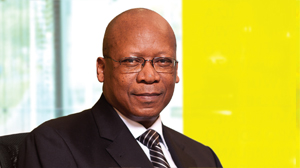
MTN’s long-term vision is to be the leader in telecommunications in emerging markets. In 2011, the Group made good progress towards achieving this with a solid overall performance, while it refined its strategic objectives in light of evolving market dynamics.
Key to our vision is our customers. Increased focus and attention on all aspects of the customer experience are fundamental to us and are evident in all of the main strategic objectives discussed below.
Maintaining and increasing our leadership position
Subscriber numbers increased 16,2% to 164,5 million across 21 markets, helping bring more people closer together. At the same time, MTN increased its EBITDA margin to 44,9%, including the profit from the sale of the Ghana passive infrastructure (from 41,5% in 2010).
This performance was notwithstanding a stronger rand in the year, which depressed foreign earnings when translated back into MTN’s reporting currency. Despite heightened competition, the Group maintained its leadership position in most of its markets and remains the largest mobile communication provider in 15 countries.
Being a leader is not only about subscribers. Superior service, network quality and coverage as well as the best value proposition in the market are absolutely critical to business success. Solid and reliable distributors are also vital. With increasing demands from authorities everywhere, clear communication channels with regulators are also important.
MTN understands that it needs to work to maintain its strong brand preference by meeting customers’ expectations for innovative and broader service offerings and by being first to market. MTN employees are rewarded for meeting targets related to all these goals. It is not without its challenges.
In the first quarter of the year, MTN Nigeria’s network quality was impacted temporarily by a large promotion which boosted traffic volumes. To maintain network quality, the company – which marked 10 years of operating in Nigeria in the year – had to withdraw the promotion. Again towards the end of the year, network quality was compromised as traffic volumes increased following pricing competition in the market. But MTN acted quickly and decisively by focusing on immediate quick wins including the redistribution of capacity and the establishment of cross functional teams in the regions to intervene and resolve site issues. As we move forward we will focus on providing a balance between maintaining sound quality levels and increased demands for services from the subscriber base.
In 2011, MTN invested R17,7 billion on developing network infrastructure across its footprint, to ensure network quality and capacity. This is below 2010’s R19,5 billion after peak spending of R30 billion in 2008/2009 laid a solid foundation. We continue to monitor our markets to ensure that capital spending is appropriate.
Revenue from traditional voice calls remains the largest revenue contributor. There is still potential to grow this as well as augment the Group’s voice offerings. Incoming interconnect revenue grew in the year in key countries such as Nigeria and Ghana as competitors focused on an all-net tariff strategy. In South Africa, incoming interconnect revenue continued to drop as the price per minute declined in line with the pre-determined glide path to lower mobile termination rates.
The higher subscriber base in the year, as well as many enhanced offerings, helped lift Group revenues 6,3% to R121,9 billion and expand the Group’s earnings before interest, taxation, depreciation and amortisation (EBITDA) to R54,75 billion.
Data and the implementation of a full ICT offering
MTN moved ahead with plans to implement a full ICT offering. Central to a comprehensive ICT service is to ensure that the Group has made the appropriate capital investments and has the right skills to execute this strategic objective.
In the year, MTN continued to invest in various transmission and radio technologies, from undersea and metropolitan fibre optic cables to 2G, 3G and WiMax. It established the role of Group chief commercial officer, to which Christian de Faria was appointed.
In addition, within the South African group of companies, MTN Business Solutions has provided a valuable platform for the development of ICT services on the corporate side. It is our intention to leverage this capability further across the footprint. However, the more sophisticated products of a full ICT strategy, such as managed network services, managed hosted services “in the cloud” and M2M, are in initial stages of development. Access remains the key offering for most people across our footprint.
The launch in the year of the Main One undersea cable led to a drop in transmission costs in West Africa. In particular, MTN Nigeria’s access to the fibre optic cable system linking West Africa to Europe is helping the company deliver greater broadband capacity at a reduced cost to customers. This provides more inclusive access to new data services and greater capacity and availability of networks.
The Group is already connected to two other submarine cables: the Eastern Africa Submarine Cable System (EASSy) and the Europe India Gateway (EIG). These cables, as well as MTN’s investment in the West African Cable System (WACS) and various metropolitan and national fibre optic cables, support new or enhanced data offerings.
Data revenue’s percentage contribution to MTN’s total revenue remains relatively low (in single digits, excluding SMS) in all our markets except for South Africa and Iran. But it is growing. For the Group, data revenue grew by 30,5% while SMS revenue grew by 14,2% to total 12,8% of revenue on a combined basis. In South Africa, where the market is more mature and MTN subscribers have 3,6 million smartphones, total data revenue, including SMS, rose to 21,4% (total revenue excluding revenue from handsets). In Iran it was 23,2%, up 2,4 percentage points. However data in Iran is almost entirely from SMS. MTN’s Nigerian operation more than doubled revenue from data services and total revenue (including SMS) increased to 6% from 4,6% as the Company encouraged the use of smartphones.
Close partnerships at a Group level with original equipment manufacturers of handsets; MTN’s focus on getting more data-capable devices into the hands of customers (without subsidies); its strong brand; and its customer segmentation model puts it in a solid position to increase revenues from data services in the year ahead. The latter allows the Group to have a segmented tailored approach to each of the identified customer groupings.
Richer and more relevant content and services are also very important. MTN estimates that some 60% of the data downloads on MTN subscribers’ mobiles is local content. This underscores the importance of continuing to develop good local content, make access easier and improve on quality and price.
At the end of 2011, 6,0 million people in 12 countries were registered MTN Mobile Money subscribers. Uganda and Ghana accounted for the lion’s share. This compares to 4,3 million in 11 markets in 2010. In Uganda, some $200 million a month is transacted through Mobile Money. Its popularity had a significant impact on limiting churn. Equally important is the role of Mobile Money in enabling the purchase and monetisation of content and related services offerings. These include insurance (such as the new funeral insurance offering by MTN Ghana) and health services, such as providing medical advice to mobile phone users, which enhance customer loyalty and reduce churn.
MTN’s recent partnership with Visa, allows Mobile Money customers to take advantage of the acceptance of Visa payment methods across the globe. MTN estimates that only a fifth of customers own a credit card. To make paying easier, MTN’s mobile wallet allows the cost of a purchase of – for example – an app to be debited directly to subscribers’ airtime. The Group recently launched a trial at South African universities allowing students to pay for cafeteria meals with their mobiles.
While the increasing affordability of data-capable handsets and the growth in use of social media has stimulated demand for data services, the availability of the appropriate spectrum allocation as well as 3G licence is also vital. In all of MTN’s markets, teams dedicated to engaging with regulators on this essential issue are in place.
The Group recently established clear targets throughout its operations with regard to growing the contribution of data to overall revenues. These include a KPI on data profitability.
Enhancing operational efficiency
As more mobile communications licences are issued across MTN’s footprint, and competition intensifies, mobile operators need to become more efficient in everything they do. While many of MTN’s markets continue to grow, many others are maturing as mobile penetration rates move towards 100% and growth slows. The Group understands that it needs to do things more efficiently.
Among several organisation-wide initiatives are: the first shared IT services project (launched in 2011 in the SEA region); the procurement transformation project to ensure a more centralised approach; the spinoff with minority ownership of passive infrastructure including towers (such as the deals in Ghana and Uganda); as well as the back office centralisation project for support services (still in its infancy) and the accelerated implementation of hybrid power systems.
By reducing its cost base, MTN is able to profitably service those customers at the lower end of the income scale and increase overall access.
Since MTN initiated its centralised procurement function in late 2010, the Group increased the number of categories purchased centrally, improving pricing across the board.
All MTN’s operating companies – from Afghanistan to Yemen – are focused on enhancing their customer service offerings; ensuring efficiency of the channels used to distribute products and services; and using their marketing expenditure, capital investments and their people effectively.
The Group recognises the importance of properly skilled employees who are motivated by their work. As competitive activity increases, demand for industry talent grows, making retention efforts that much more important. In April the Group launched “The MTN Deal”. This is a mutual commitment between MTN and its employees. It represents MTN’s pledge to understand, develop career opportunities and improve employment offering beyond reward and recognition.
Employees who make an outstanding contribution to the Group are rewarded every year through the Y’ello Stars programme. Employees also take great satisfaction in volunteering for those less fortunate in the Group’s annual 21 Days of Y’ello Care volunteerism effort. Many enjoy moving between operations to share their knowledge while developing their careers. The Group spent R265 million on training in the year.
Increasing returns to shareholders
A central pillar of MTN’s strategy is to increase cash returns to shareholders while continuing to expand its business and invest in better, faster networks across a wider geography. Management targets improving cash flow, to ensure that the management fees and dividends earned in MTN operations flow back to the Group in an efficient way.
Using both ordinary dividends and share buybacks, MTN is able to return cash to shareholders as part of a sustained returns strategy. During the year, MTN executed its first share buyback totalling R927,3 million. While no decision has been made to further gear the Group balance sheet, dividends on annual earnings have been increased to 70% and buybacks will continue to be implemented as and when appropriate.
M&A outlook and priorities
MTN continues to consider bolt-on stand-alone opportunities across Africa and the Middle East. However it is very clear that the following criteria must be met: fit within the organisational strategy of the group; have sufficient scale and size; and preferably be a number one or number two operator. Financial discipline is crucial in the process. Transformational transactions seem unlikely due to the limited number of opportunities and high execution risk.
Looking ahead
All the changes required ahead, particularly the need to optimise at a group level, necessitate a change in MTN’s structure. Accordingly, the regional structures will be replaced by a grouping of the various operations based on scale and size. The success of any new strategy is based on successful implementation in our key markets of South Africa and Nigeria. Accordingly, the CEOs of these operations will report directly to me from 1 April 2012. As a third contributor to the Group, to oversee all the other operations, a new position, Chief Operations Executive (COE) has been created, also reporting to me. An operational structure below the COE will ensure adequate support for various size-based groupings of these operations. This will allow for appropriate sharing of best practice between businesses of similar scale.
I welcome the CEOs Karel Pienaar from South Africa and Brett Goschen from Nigeria onto the exco team and congratulate Ahmad Farroukh on his new role as COE. Finally a big thank you to the outgoing regional VPs Jamal Ramadan, who will be retiring, and Ignatius Sehoole, who will join the business risk management team within the organisation.
| Key to our vision is our customers |
Political unrest in the Middle East remains a concern and MTN continues to be sensitive to these international issues. In partnership with its legal advisers, MTN ensures that it remains compliant with the various sanctions regimes in place.
MTN has set up the independent Hoffmann Committee to investigate Turkcell’s allegations and will carefully consider the recommendations made by the Committee.
MTN remains cautiously optimistic about the year ahead with macroeconomic conditions in key markets not expected to change significantly. The key focus areas over the year are to maintain and improve our market position and improve the customer experience. There will be continued effort to strengthen our position in non-voice services in all markets. Increased efficiency in rolling out investments in infrastructure and cost optimisation initiatives are a priority in support of this strategy. Value-accretive opportunities which fit within the parameters of MTN’s M&A strategy will still be considered. We will continue to manage the challenges brought about by sanctions and political instability in some of our markets. There remains a strong commitment to improving shareholder returns.
In 2012, MTN has earmarked capital spending of R24,4 billion, with Nigeria and South Africa accounting for approximately 62% of this investment. The Group expects to sign up 20,3 million new subscribers in the year, of which 53,7% are in Nigeria, South Africa and Iran.
Sifiso Dabengwa
Group president and CEO
March 2012
|