
| Currently viewing: Operational performance: Syria / Next: Governance highlights |
 |
 |
 |
Downloads |  |
Home |
Operational performance: Syria
for the year ended 31 December 2011
|
||||||||||||||||||||||||||||||||||||||||||||||||||||||||||||||||||||||||||||||||||||||||||||||||||||||||||||||||||||||||||||||||||||||||||||||||||||||||||||||||||||||||||||||||||||||||||||||||||||||||||||||||||||||||||||||||||||||||||


Performance overview
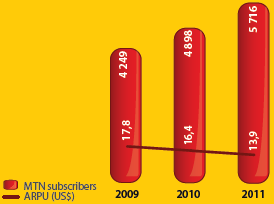
MTN Syria’s performance was dampened by the civil unrest in the country. The company increased its subscriber base by 16,7% to 5,7 million, marginally increasing market share to 46%.
Revenue in Syrian pounds remained flat as airtime and subscription revenue declined 1,2% as a result of the challenges of providing continuous network service. Data revenue (excluding SMS) increased 17,0% while SMS revenue increased 11,8%.
The EBITDA margin increased 2,7 percentage points to 26,2%. This was mainly due to lower distribution and commission costs associated with reduced sales and tighter cost management.
Rand reported revenues showed a decline of 5,2% to R6 463 million while EBITDA grew 5,3% to R1 690 million. These results were also negatively impacted by a weaker Syrian pound against the rand. Capital expenditure for the period amounted to R449 million.
Regulatory update
The telecoms industry in Syria is heavily regulated. MTN Syria works under a build operate transfer (BOT) arrangement, with conversion to a freehold mobile operator’s licence due to have taken place in 2011 but delayed because of the political unrest in the country.
The high level of revenue share (50% of gross revenue) under the BOT arrangement limits MTN Syria’s ability to reduce tariffs, which means costs must be tightly managed. This also impacts the company’s ability to acquire new subscribers from the lower-income segments.
Sustainability
Sustainable economic value – MTN Syria is working to make 3G services available in most parts of the country and is deploying large-capacity microwave and fibre optic links to transmission nodes. The company is looking at alternatives to facilitate customers’ payments for water and electricity services.
Eco-responsibility – MTN Syria’s carbon footprint is 18,1 tonnes CO2e per annum and the company is working to reduce its energy use. This includes converting most indoor BTS and terminal and sub-hub sites to outdoor sites, using smart battery backup systems which use less fuel, and testing new shelters for transmission sites. MTN Syria is also researching solar power solutions. It has implemented a number of programmes to reduce the environmental impact of its facilities, including better management of generators after hours, warehouse electrical load loss management and installing LED lights at its new head office.
Sustainable societies – MTN Syria is a member of the UN Global Compact.
 |
View the report at org/COPs/detail/12966 |
An anonymous tipoff service is in place in support of the company’s zero-tolerance approach to fraud and corruption. MTN Syria’s equality and diversity policy has led to women making up 36% of employees, and in 2012 it will extend employee benefits to include child care facilities or subsidies. While working within the centralised Group procurement structures, local businesses also have an opportunity to supply certain items to support the growth of local employment.
|