



 18 / 96

The short-term input to securing sufficient
spectrum is financial capital. By establishing and
maintaining an extensive high-quality network,
and by using non-renewable resources, we
impact negatively on natural capital. However,
through infrastructure sharing, improving energy
efficiencies and investing in low-carbon power
we are able to mitigate the overall impact on this
stock of capital. Opportunities also exist to use
our ICT services to help industries improve the
management, use and allocation of natural
resources.
How we create value using the six capitals
continued
Natural capital
Radio spectrum is a natural capital and the industry’s key enabler. Access to it is regulated
and is influenced by a country’s political and economic priorities. Where we do not have
sufficient spectrum, we re-farm existing spectrum to offer our customers LTE services.
We also depend on reliable access to energy and land.
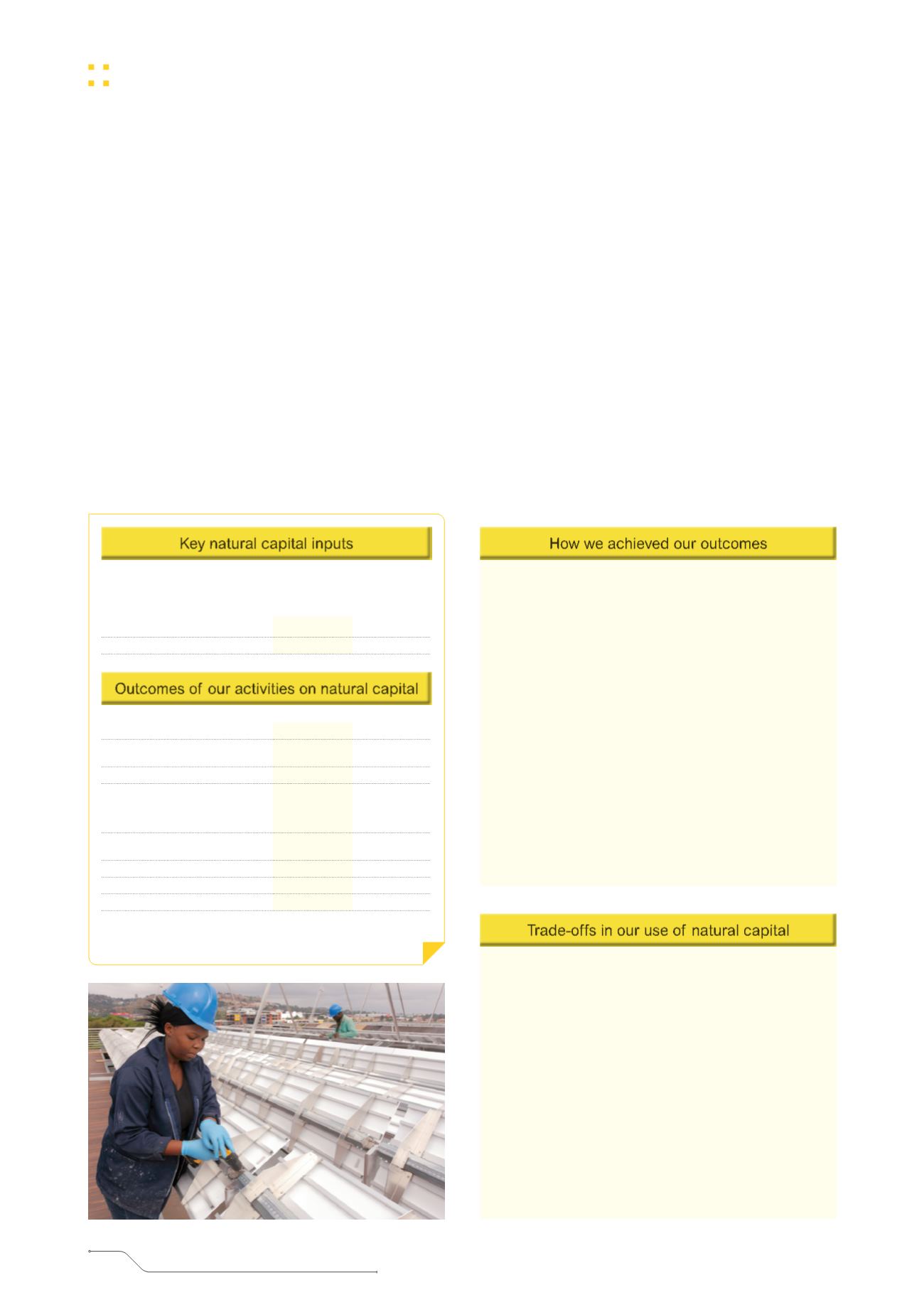
Our most material area of environmental impact relates to the consumption of energy by
our operations and the use of electronic and electrical equipment by both MTN and our
customers. This results in greenhouse gas emissions, end-of-life waste management
challenges, and other environmental impacts. As we sell some facilities to tower
management companies, some of our impact is transferred. Through our investment in
efficient and green power sources, energy and carbon accounting programmes, e-waste
management and office-greening projects, we work towards using fewer non-renewable
resources and a smaller environmental impact.
•
Optimised our network infrastructure for
efficiencies through network modernisation and
investments in new data centre technologies
and facilities which are highly energy efficient
•
Changed design of infrastructure to ensure
resilience to change in climate or increase in
extreme weather events
•
Implemented alternative energy measures and
thereby improved our energy security, countered
increasing energy costs and reduced our
exposure to carbon taxes
•
Partnered to improve awareness about the
problems created by e-waste generation,
increase collection and recycling volumes and
mitigate our environmental impact
•
Secured spectrum inNigeria, Ghana andCyprus
•
Radio spectrum in the 800, 900, 1 800, 2 100,
2 300, 2 600 MHz bands
2016
2015
Gigajoules of energy used
13 514 716
15 212 286
2016
2015
Carbon emissions (tonnes of
CO
2
equivalent)
1 609 704
1 589 888
GHG emissions avoided (tonnes)
833
7 947
Total number of sites, data centre
switches, hubs, offices at which
energy-efficiency solutions
implemented
10 454
10 439
Total number of solar and
solar-hybrid sites (MTN owned)
340
329
E-waste recycled (tonnes)
537
534,5
Paper saved (kg)
15 646
15 271
Waste recycled (kg)
1 808
629
MTN Group Limited
Integrated Report 2016
16